Photography, automation and the question of creative freedom.
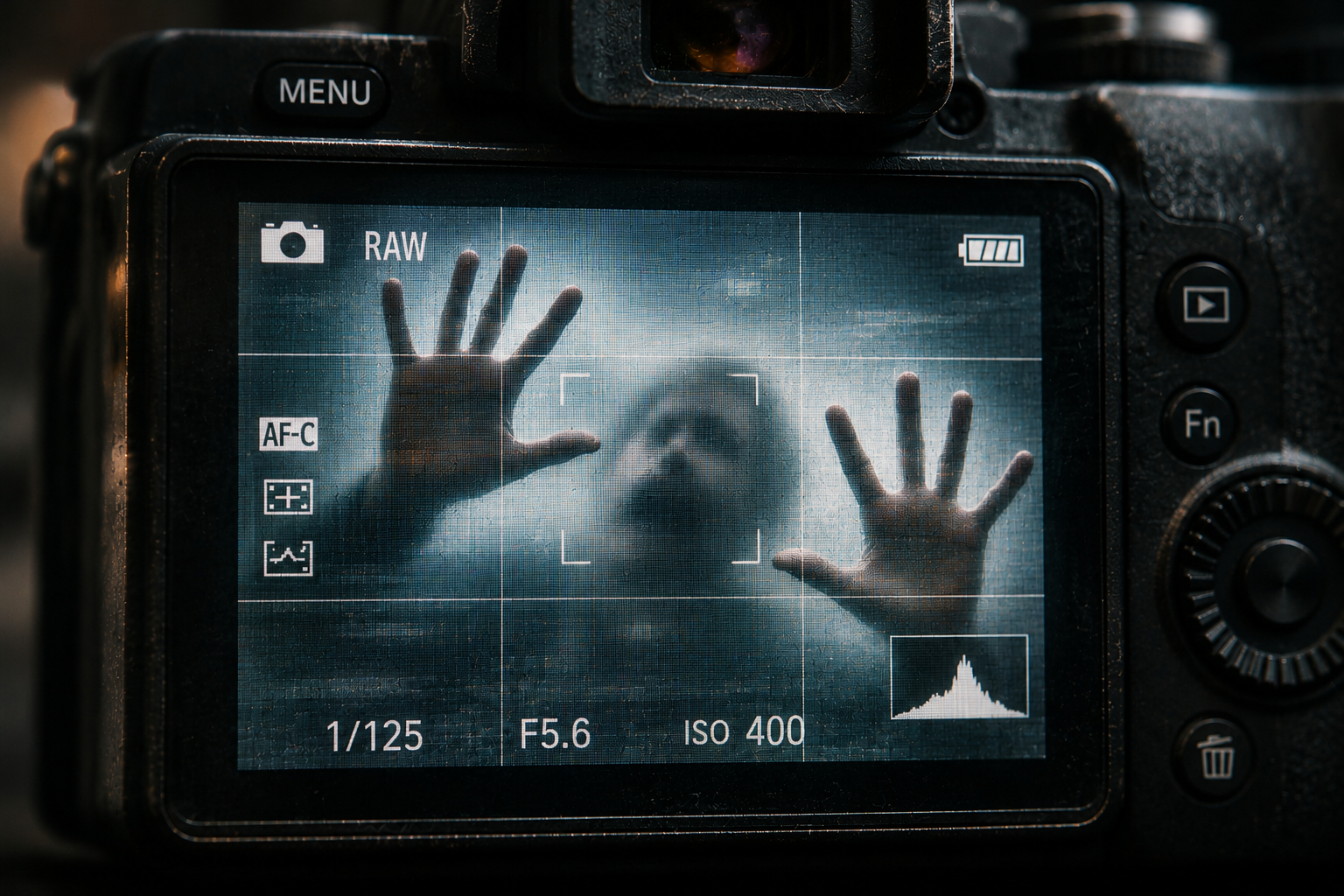
Playing Against the Camera. AI-generated image, created in collaboration with ChatGPT, 2026.
“Freedom is playing against the camera.”
— Vilém Flusser, Towards a Philosophy of Photography (2000, p. 80)
In his 1983 book Towards a Philosophy of Photography, the philosopher Vilém Flusser proposed a rather unsettling way of thinking about the camera. Rather than regarding it simply as a tool through which photographers express their intentions, he understood it as an apparatus governed by a programme.
For Flusser, every photograph represents the realisation of a possibility already contained within the camera's programme. The photographer may feel entirely in control of the image, but the possibilities available to them have, to some extent, already been determined.
Writing long before smartphones, computational photography and generative artificial intelligence, Flusser raised a question that feels increasingly relevant today: when we take a photograph, to what extent are we exercising our own creative intentions, and to what extent are we fulfilling the intentions of the apparatus?
The programmed image
The idea that technology is not simply a neutral instrument through which we exercise our intentions was explored almost two decades earlier by the media theorist Marshall McLuhan. In his influential book Understanding Media: The Extensions of Man, McLuhan famously declared that “the medium is the message” (McLuhan, 1964).
His argument was that the significance of a technology lies not simply in what we do with it, but in the ways in which it shapes our behaviour, perceptions and relationships with the world. Applied to photography, this suggests that the camera is not merely a means through which we communicate our observations. Its very presence influences how those observations are formed.
Every camera embodies a series of decisions made by someone other than the photographer. Its designers determine the optical characteristics of its lenses, the range of its shutter speeds and the mechanisms through which an image is produced. Even the simplest mechanical camera establishes a set of parameters within which the photographer must operate. The programme that Flusser describes need not be understood as software. It is the collection of possibilities and limitations built into the apparatus itself.
A panoramic camera renders space differently from a conventional camera. A pinhole camera records light differently from a camera equipped with a precision optical lens. Each apparatus offers a particular interpretation of the visible world.
How often, for example, do we find ourselves looking at the world differently simply because we are carrying a particular camera or lens? A wide-angle lens encourages us to consider spatial relationships, whilst a telephoto lens invites us to isolate details. The format of a camera can influence the way we compose an image before we have even raised it to our eye.
In my own photographic practice, working with a Widelux panoramic camera encourages me to look for relationships between subjects distributed across a much wider field of vision. Its rotating lens also records different parts of the scene at slightly different moments, introducing a temporal dimension to the image that is absent from a conventional single, near-instantaneous exposure.
The apparatus influences not only the appearance of the resulting photographs, but also the way in which I encounter and observe my surroundings. The photographer chooses the camera, but the camera also influences what the photographer chooses to photograph.
The apparatus is not simply recording our way of seeing. It is participating in its formation.
The gradual delegation of decisions
The history of photography can, in part, be understood as a history of the gradual delegation of decisions from the photographer to the apparatus.
Light meters relieved photographers of the need to estimate exposure. Automatic exposure systems allowed cameras to select aperture and shutter speed. Autofocus removed the necessity of manually focusing a lens. More recently, subject recognition systems have enabled cameras to identify people, animals, vehicles and even individual eyes.
Each development has made photography more accessible and allowed photographers to concentrate on other aspects of image-making. There is nothing inherently problematic about this. A photographer using autofocus is no less capable of producing a meaningful image than one focusing manually.
However, the increasing automation of creative processes has implications beyond convenience. In his 2001 book The Language of New Media, the media theorist Lev Manovich identified automation as one of the fundamental principles of digital media, observing that “human intentionality can be removed from the creative process, at least in part” (Manovich, 2001).
There is an important distinction between an apparatus that assists us in realising our intentions and one that begins to anticipate or determine those intentions on our behalf.
When a camera identifies a face within a composition and automatically prioritises its exposure and focus, it makes an assumption about what is important within the image. That assumption may be entirely appropriate, but it may also be at odds with what the photographer intended.
In deciding what should be in focus, the apparatus is no longer making a purely technical decision. It is making an interpretative one. As cameras become more sophisticated, their programmes increasingly determine not only how a subject is photographed, but which elements of a scene are considered worthy of attention.
Opening the black box
Flusser characterised the camera as a black box: an apparatus whose inputs and outputs can be understood by its operator without necessarily understanding all of the processes taking place within it (Flusser, 2000, pp. 27–28). This distinction between operating an apparatus and understanding its operation becomes particularly relevant in the context of contemporary digital photography.
With a mechanical camera, the fundamental relationship between aperture, shutter speed and film sensitivity is relatively accessible. Whilst the chemical and optical processes involved may be complex, the photographer can establish a working understanding of how their decisions influence the resulting image.
In a computational camera, however, the relationship between the input and the output becomes considerably more complicated. A single press of the shutter may initiate a sequence of processes involving multiple exposures, image alignment, noise reduction, tonal adjustments, subject recognition and the application of machine learning models.
Many of these operations are invisible to the photographer, and some are difficult or impossible to disable. The camera becomes easier to operate whilst the processes through which it produces an image become increasingly difficult to comprehend.
There is an interesting paradox here. Technological sophistication can give us greater practical control over the conditions in which we are able to photograph, whilst simultaneously reducing our understanding of how the resulting photographs are being made.
From capturing to computing
Computational photography represents a more fundamental shift in the relationship between the photographer and the apparatus.
A photograph taken with a contemporary smartphone may be the product of multiple exposures, combined and processed automatically. Shadows are lifted, highlights recovered, noise reduced, details sharpened and colours adjusted. Depth information can be estimated to simulate the optical characteristics of a much larger camera and lens.
In their 2016 research paper Burst Photography for High Dynamic Range and Low-Light Imaging on Mobile Cameras, researchers working at Google described a photographic system that “captures, aligns, and merges a burst of frames to reduce noise and increase dynamic range” (Hasinoff et al., 2016). The resulting photograph is a synthesis of several recorded moments rather than the product of a single exposure.
This is particularly interesting when considered alongside John Szarkowski's observations in The Photographer's Eye. Szarkowski identified one of the fundamental differences between photography and traditional image-making as the fact that photography was “a process based not on synthesis but on selection” (Szarkowski, 1966, p. 6).
The photographer selected from the visible world rather than constructing an image from individual elements, as a painter might. Of course, photography has never been entirely free from synthesis. Combination printing, photomontage, multiple exposures and darkroom manipulation have been part of the medium's history since its early years.
What is different is that synthesis is increasingly embedded within the ordinary act of taking a photograph. The photographer need not consciously decide to combine exposures or manipulate tonal relationships. These processes may simply be part of the way the apparatus produces its images. What was once a conscious act of photographic interpretation can now become automated. In delegating these decisions to the camera, the photographer may also be delegating aspects of their creative agency.
It raises an interesting question: whose interpretation of the world are we looking at? The photographer's? The software engineer's? The camera manufacturer's? Or some combination of all three?
Consider the photograph of a sunset. The photographer may have been drawn to the subdued colours and delicate tonal relationships of the fading light. The camera, however, may produce a more saturated, dramatic interpretation based on its programmed assumptions about what makes an appealing photograph of a sunset.
The apparatus has not malfunctioned. It has performed precisely as intended. But whose intentions has it fulfilled?
The aesthetics of the algorithm
If an apparatus is programmed to produce a technically successful photograph, what constitutes success?
Sharpness, accurate exposure, clean shadows, balanced colours and recognisable subjects are all characteristics commonly associated with photographic quality. Yet many of the most interesting photographs deliberately depart from these conventions.
Ansel Adams, a photographer closely associated with technical precision, is credited with the observation that “there is nothing worse than a clear, sharp image of a fuzzy concept”. The sentiment draws attention to an important distinction between technical accomplishment and creative accomplishment.
Motion blur can communicate the passage of time. Deep shadows can conceal information and create ambiguity. Grain can become an integral part of an image's aesthetic. An out-of-focus subject can be more evocative than a sharply rendered one.
From the perspective of an automated system, however, these qualities may be interpreted as problems to be corrected.
There is a potential contradiction here. Whilst technological developments expand the range of images that cameras are capable of producing, their automated systems may encourage a narrower definition of what a photograph should look like. The pursuit of technical perfection can come at the expense of other photographic possibilities.
In Software Takes Command, Lev Manovich (2013) explores how software has become fundamental to the production and experience of contemporary culture. Software is not simply a means of reproducing existing creative practices more efficiently; its capabilities and operations actively shape those practices.
Applied to photography, this raises the possibility that the algorithms responsible for processing our images are also influencing our collective photographic aesthetic. When similar processing systems are applied to millions of photographs, there is the potential for a degree of aesthetic convergence. Different photographers, photographing different subjects in different parts of the world, may find their images shaped by similar assumptions about colour, contrast, composition and visual appeal.
The programme becomes, in effect, a shared aesthetic influence.
Furthermore, as we become accustomed to the visual characteristics of computationally processed photographs, our own expectations may begin to change. Shadows that once appeared perfectly natural may come to seem too dark. Subdued colours may appear insufficiently vibrant. The optical limitations of a small camera may come to seem unacceptable.
The apparatus not only responds to our aesthetic preferences; it may also participate in their formation.
Artificial intelligence and the apparatus
Artificial intelligence introduces a further dimension to Flusser's argument. AI-assisted photographic tools can recognise and isolate subjects, remove unwanted objects, reconstruct details and generate content to extend or modify an existing image. The apparatus is no longer confined to interpreting the information it has recorded. It can introduce information that was never present before the camera.
Generative AI takes this a step further, producing images with the appearance of photographs without requiring a camera, a physical subject or a corresponding encounter with the external world. Although these are distinctly different processes, both invite us to reconsider the relationship between human intention and the programmed apparatus.
The artist and media theorist Joanna Zylinska has explored this relationship through her concept of nonhuman photography. In Nonhuman Photography (2017), she challenges the assumption that photography is an exclusively human activity, drawing attention to the increasingly complex relationships between human and technological processes involved in the production of images.
Her argument offers an alternative to the idea that the increasing involvement of automated systems necessarily represents a displacement of the photographer. It can also be understood as an intensification of a relationship that has always existed between humans, their technologies and the images they produce.
The person generating an image through a written prompt may experience a considerable degree of creative freedom. An extraordinary range of subjects, scenarios and visual approaches can be imagined and explored. Yet the image remains dependent on the capabilities, training data, architecture and constraints of the model through which it is produced.
The user may appear to be directing the apparatus, but they must also learn to communicate in ways that the apparatus understands. They adapt their language, refine their instructions and modify their expectations in response to the images it returns.
In this respect, prompting an AI image generator bears an interesting resemblance to learning to operate a camera. Both involve translating creative intentions into a form that can be interpreted by a programmed system.
The distinction between photographic capture and image generation remains significant. Nevertheless, the relationship between the operator and the apparatus is a remarkably contemporary manifestation of the one Flusser described more than four decades ago.
We programme the apparatus, but the apparatus also programmes us.
Playing against the camera
For Flusser, however, the programmed nature of the apparatus did not necessarily mean that creative freedom was impossible. On the contrary, the creative potential of photography lay in the photographer's ability to challenge the programme, exploring possibilities beyond those the camera was ordinarily expected to fulfil. He suggested that photographers could intervene in the operation of the apparatus, introduce intentions not anticipated by its designers and encourage it to produce unexpected results (Flusser, 2000, pp. 80–81).
This idea is particularly interesting in the context of experimental photography. The work of Japanese photographers associated with the late-1960s magazine Provoke, including Daidō Moriyama and Takuma Nakahira, offers one example. The visual approach associated with the movement, often described as are, bure, boke — rough, blurred and out of focus — challenged established conventions of photographic representation.
Rather than pursuing the descriptive clarity that photographic technology was increasingly capable of delivering, these photographers explored the expressive possibilities of ambiguity and imperfection.
Similarly, the use of inexpensive plastic cameras such as the Holga, with their imperfect optics, light leaks and unpredictable exposures, challenges the assumption that a more sophisticated apparatus necessarily produces a more interesting photograph. Intentional camera movement, multiple exposures, expired film, pinhole photography and unconventional darkroom processes all offer ways of working beyond the conventional expectations of photographic equipment.
These approaches do not necessarily escape the programme of the apparatus altogether. Indeed, the capacity of a camera to produce a blurred image remains one of its inherent possibilities. What they challenge is the hierarchy of values through which those possibilities are ordinarily understood.
A technically undesirable result can become a creatively desirable one.
Importantly, playing against the apparatus does not necessarily mean rejecting technological advancement. A contemporary digital camera, sophisticated software or even a generative AI system can become a site of experimentation.
In AI Art: Machine Visions and Warped Dreams (2020), Zylinska considers AI art in relation to the wider technological, cultural and social conditions within which creativity takes place, rather than simply the novelty of the images it produces.
Working creatively with AI might therefore involve more than producing increasingly convincing images. It might involve questioning the visual assumptions embedded within these systems, exposing their limitations or exploring the unexpected results of their operation.
The distinction lies not in the sophistication of the technology, but in our relationship with it. Are we simply exploring the possibilities that the apparatus presents to us, or are we questioning the assumptions behind those possibilities and finding ways to use them differently?
Relinquishing control
There is, however, another dimension to the question of control.
Experimental photographers often deliberately relinquish control over aspects of their image-making. Chance, unpredictability and the behaviour of physical materials become active participants in the creative process.
This is something I have explored through cameraless photography, where the interaction of light, chemistry, water and environmental conditions can produce images that could neither have been accurately anticipated nor entirely controlled.
As discussed in my earlier article, In Search of the Unforeseen, the creative process can involve establishing the conditions through which an image might emerge rather than determining precisely what that image should look like. At first, this might appear contradictory. If creative freedom involves resisting the control of the apparatus, why deliberately surrender control to other processes?
The composer and artist John Cage, whose creative practice frequently incorporated chance operations, offers an interesting parallel. In Silence: Lectures and Writings, Cage (1961) explored approaches to composition in which the artist's personal preferences need not determine every aspect of the resulting work.
The introduction of chance does not necessarily represent an absence of creative intention. The decision to introduce chance is, in itself, a creative act. Creative agency, therefore, need not be synonymous with an ability to determine every characteristic of the resulting image. It can also reside in the decision to make the outcome uncertain.
There is an important distinction between choosing to relinquish control and unknowingly surrendering it.
In one instance, the photographer establishes the conditions through which something unforeseen might emerge. In the other, the apparatus may resolve uncertainty according to an existing set of preferences. One invites the unexpected. The other may seek to eliminate it.
This is not an absolute distinction. Computational and AI-based processes can also introduce unpredictability, just as traditional photographic processes can be highly controlled. What matters is the intention behind the delegation of control and the photographer's awareness of its consequences.
Who is really in control?
The idea that the photographer has ever been entirely in control of the photographic image is, perhaps, something of an illusion. Photography has always involved a negotiation between intention, technology, materials, subject matter and circumstance. The apparatus has always participated in the production of the image. What makes contemporary photography particularly interesting is the increasing complexity and invisibility of that participation.
McLuhan recognised that technologies shape our behaviour and perceptions. Szarkowski identified selection as a fundamental characteristic of photographic image-making. Manovich drew attention to the automation of human intentionality, whilst Zylinska has questioned the extent to which image-making can be understood as an exclusively human endeavour.
Flusser brings these questions together through the relationship between the photographer and the programmed apparatus. As cameras become more capable of interpreting the world on our behalf, understanding how they do so becomes an increasingly important part of photographic literacy.
The challenge is not necessarily to reclaim complete control of the image, nor to reject the conveniences of automation. It is to remain conscious of the decisions we make, the decisions we delegate and the assumptions that accompany them.
Creative freedom may reside less in our ability to control every aspect of the photographic process than in our ability to recognise, question and challenge the systems through which our images are produced.
A camera that can do almost anything presents an extraordinary range of creative possibilities. But if we allow it to determine what is worth seeing and how it should be seen, are we expanding our photographic vision or simply becoming more proficient at realising its programme?
Perhaps the most interesting photographs will continue to emerge not from what the apparatus was designed to do, but from what we discover when we encourage it to do something else.
References
Adams, A. (n.d.). Quotation attributed to Ansel Adams. Ansel Adams: Quotations.
Cage, J. (1961). Silence: Lectures and Writings. Middletown, CT: Wesleyan University Press.
Flusser, V. (2000). Towards a Philosophy of Photography. Translated by Anthony Mathews. London: Reaktion Books. Originally published in 1983.
Hasinoff, S. W., Sharlet, D., Geiss, R., Adams, A., Barron, J. T., Kainz, F., Chen, J. and Levoy, M. (2016). ‘Burst Photography for High Dynamic Range and Low-Light Imaging on Mobile Cameras’. ACM Transactions on Graphics, 35(6). DOI: 10.1145/2980179.2980254.
Manovich, L. (2001). The Language of New Media. Cambridge, MA: MIT Press.
Manovich, L. (2013). Software Takes Command. New York: Bloomsbury Academic.
McLuhan, M. (1964). Understanding Media: The Extensions of Man. New York: McGraw-Hill.
Szarkowski, J. (1966). The Photographer's Eye. New York: Museum of Modern Art.
Zylinska, J. (2017). Nonhuman Photography. Cambridge, MA: MIT Press.
Zylinska, J. (2020). AI Art: Machine Visions and Warped Dreams. Open Humanities Press.