Must a photograph be a representation of something that already exists, or can it be a direct physical manifestation of the phenomenon it records?
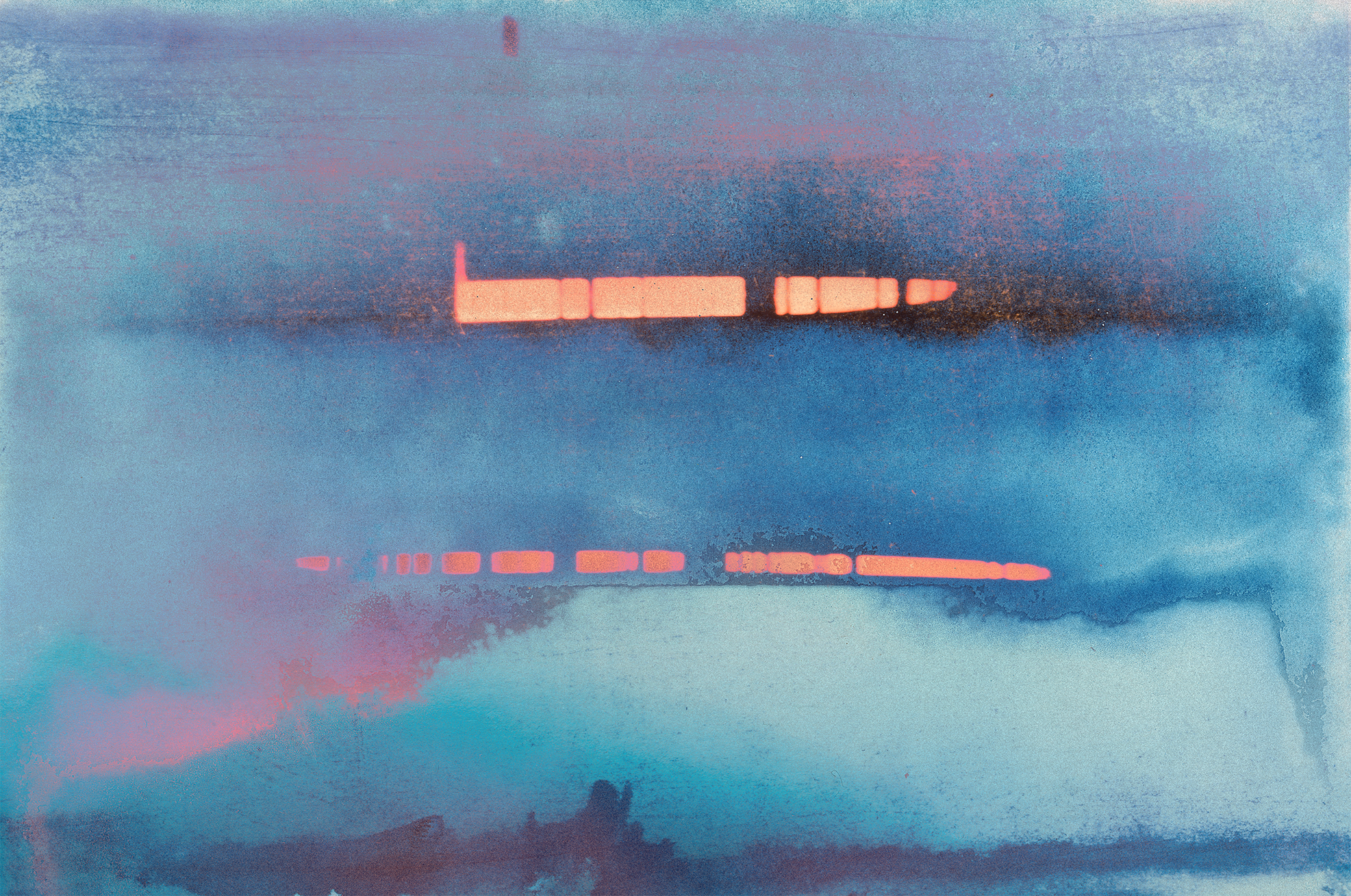
Robert Davies. From sunrise to sunset. Cyanotype on silver gelatin paper. 2023.
Photography has become almost inseparable from the apparatus we associate with it. The camera, the lens and the shutter have become so central to our understanding of the medium that it seems almost contradictory to speak of photography without a camera.
Yet what happens when we remove the camera from the photographic process? When the photographer relinquishes a degree of creative control and allows the physical world to participate directly in the making of an image?
Rather than making photographs of nature, could we provide nature with a surface upon which to record itself?
These questions formed the basis of Climagrams, a body of experimental photographic work I developed in 2023, exploring the relationship between photography, natural phenomena, chance and artistic intention.
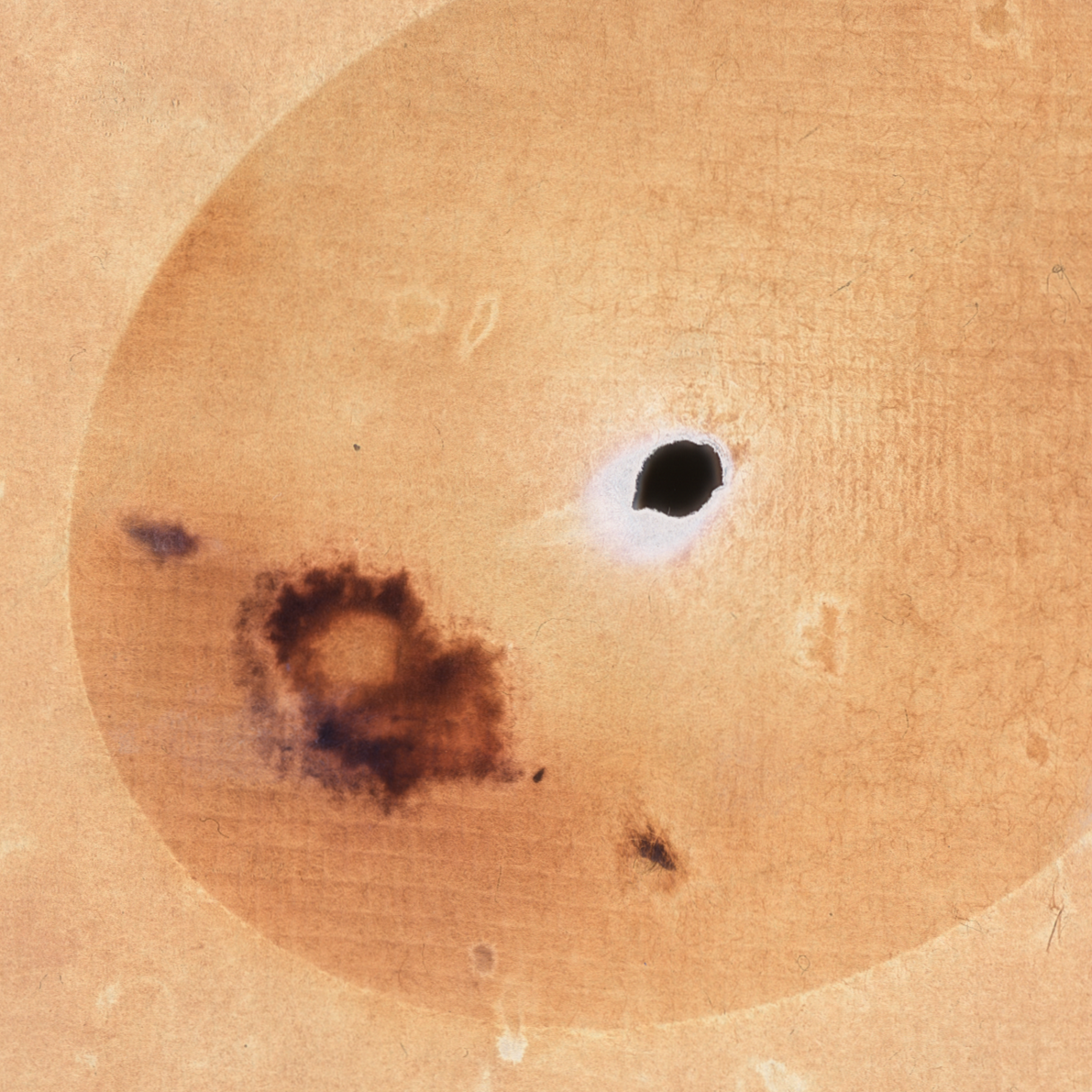
Robert Davies. Three hundred seconds in the sun. Harnessing sunlight through a crystal sphere. Cyanotype, reversed. 2023.
Beyond the camera
The title Climagrams draws on the terminology of cameraless photography, such as photograms, chemigrams and luminograms, whilst also borrowing from meteorology, where a climagram is graphical representation of climatic data, typically showing the relationship between temperature and precipitation over a period of time.
This convergence of photography and meteorology provided a starting point for exploring alternative ways of recording the natural environment. By working predominantly without a camera, my intention was to move beyond photography’s conventional role as a means of representing the world and instead allow natural phenomena to participate directly in the creation of the image, embracing what Geoffrey Batchen (2016) describes as an “art of the real”.
The distinction lies in the relationship between the photograph and its subject. Rather than creating an image that resembles something in the physical world, cameraless photography can produce an image that is a direct physical consequence of it.
John Szarkowski recognised this distinction in 1967 when discussing the exhibition A European Experiment at the Museum of Modern Art. He described such photographs not as windows onto the world, but as small pieces of the world itself, possessing their own colour, texture, shape and provenance.
In the context of Climagrams, this idea takes on particular significance. Each photograph is the product of a unique set of environmental conditions, an accumulation of natural processes that cannot be precisely repeated. The physicality and irreproducibility of these photographic objects serve as a metaphor for the fragility and uniqueness of the planet itself. Unlike a photographic negative, the Earth is not something from which we can make another copy.
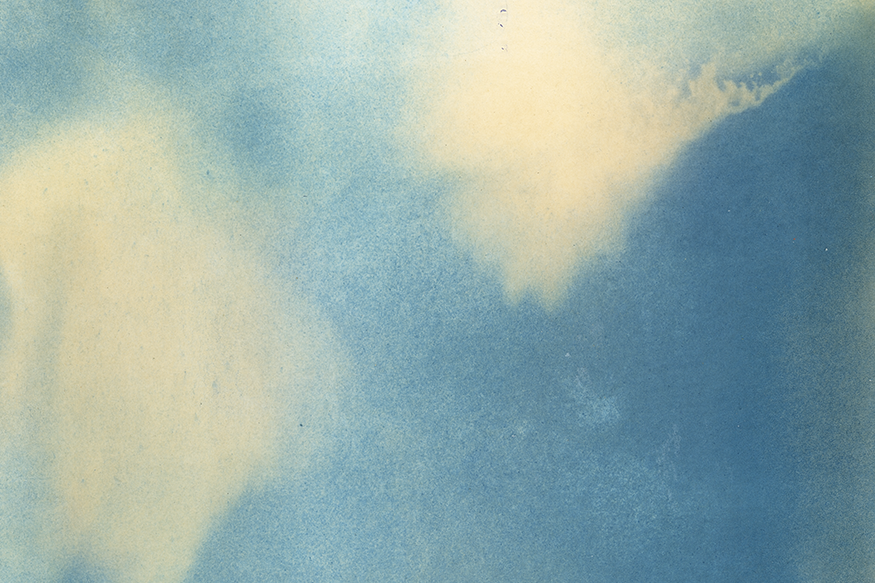
Robert Davies. Half an hour in a tropical shower. Cyanotype-coated cartridge paper exposed to rainfall for thirty minutes. 2023.
Photographing the invisible
From its earliest days, photography was understood not only as a means of artistic expression but also as a tool for scientific observation. Its ability to record phenomena beyond the limits of human vision opened up new possibilities for understanding the natural world.
Whilst the pioneering experiments of William Henry Fox Talbot and John Herschel are well documented, some of the lesser-known figures in photographic history offer equally fascinating insights into the potential of the medium.
In 1844, French physicist Léon Foucault collaborated with Hippolyte Fizeau in an attempt to photograph light itself. By exposing a silvered daguerreotype plate to different sources of light for varying durations, they sought to measure their relative intensities.
The resulting image, Spectre solaire (1844), resembles a scientific graph more than a conventional photograph. Rather than recording the appearance of a subject illuminated by light, it records the physical effects of light itself. This raises a fundamental question about the nature of photography: must a photograph be a representation of something that already exists, or can it be a direct physical manifestation of the phenomenon it records? In the latter case, the photograph is not merely an image of its subject but a material trace of its existence.
In Camera Lucida (1980), Roland Barthes famously described the essence of photography as the “that-has-been”. A conventional photograph bears witness to something that existed before the camera at the moment of exposure.
With certain forms of cameraless photography, however, this relationship changes. The image does not necessarily correspond to something that previously existed in a visible form. Instead, it comes into existence through the interaction of light, chemistry, materials and environmental conditions.
As Geoffrey Batchen (2016) suggests, the photograph becomes an emanation of the world rather than a copy of it. Rather than simply representing reality, the photograph becomes a physical extension of the reality it records.
The materiality of photography
One of the attractions of cameraless photography is the opportunity to explore the photographic surface not simply as a means of recording an image, but as an active component in its creation.
The American artist Barbara Kasten explored these possibilities in her Photogenic Paintings, combining cyanotype chemistry with inks to create works that blur the boundaries between photography and painting.
Inspired by Kasten’s approach, I began experimenting with mixtures of cyanotype solutions, acrylic inks and thickening agents. By altering the physical properties of the photographic chemistry, I was able to slow down the development process, allowing environmental conditions to influence the formation of an image over extended periods of time.
In Seven days, six nights, a mixture of photographic chemicals, inks and thickening agents was left exposed to the elements for a week. As the materials interacted, dried and evaporated, they gradually formed patterns resembling an aerial view of a landscape or coastline.
Although the image evokes a recognisable geographical landscape, no such place exists. What we see is a topography formed entirely through the interaction of photographic materials and environmental conditions.
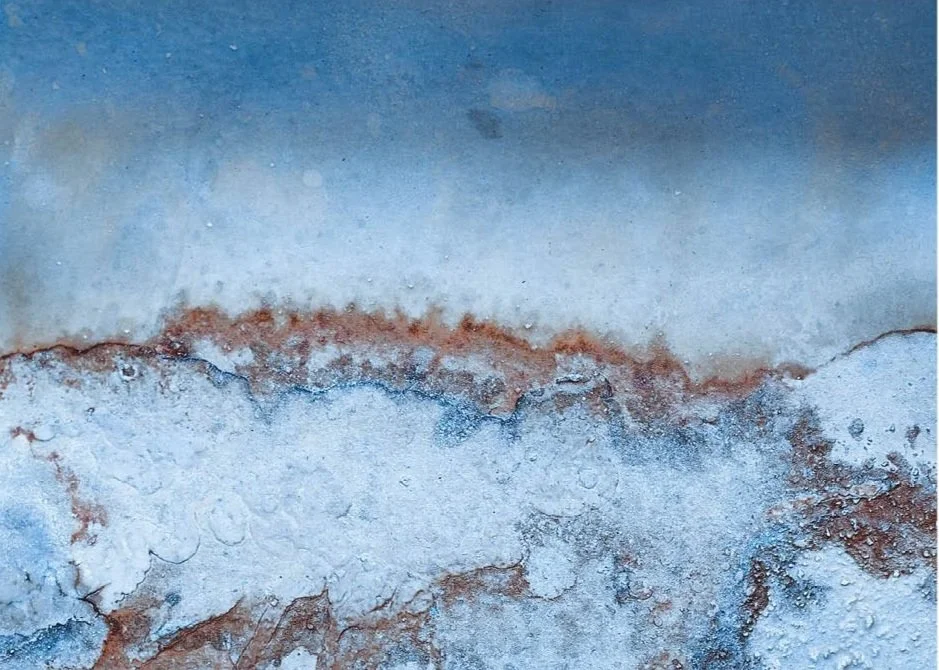
Robert Davies. Seven days, six nights. Cyanotype-coated paper with inks and thickening agents, left to evaporate for a week. 2023.
The image continued to change beyond its intended exposure period and was still evolving at the time of writing my original research. This raised an interesting question: at what point can a photograph be considered complete?
In his essay Event, Trace, Intensity (2007), Régis Durand suggests that longer photographic exposures can strengthen the physical presence of a subject by allowing its traces to accumulate over time.
Rather than preserving a single moment, these photographs record the passage of time through physical and chemical changes to their surfaces. Even after the intended exposure has ended, their appearance can continue to change. In this sense, they challenge the conventional understanding of a photograph as a fixed image, becoming instead evolving objects that remain subject to the same natural processes that brought them into existence.
Chance and artistic intention
Introducing chance into the photographic process does not mean abandoning artistic intention. The choice of materials, the preparation of the photographic surface, where it is placed and how long it is exposed are all deliberate creative decisions. What the photographer relinquishes is complete control over the outcome.
In 1894, Swedish playwright and artist August Strindberg experimented with exposing light-sensitive photographic surfaces directly to the night sky, calling the resulting images Celestographs.
In his essay On Chance and Artistic Creation (1894), Strindberg expressed a desire to imitate nature’s own methods of creation. Rather than attempting to reproduce the appearance of the night sky, he allowed photographic chemistry and environmental conditions to determine the appearance of the image. The resulting photographs are ambiguous, making it difficult to distinguish between traces of celestial phenomena and those of earthly origin.
Over a century later, these photographs continue to bear evidence of natural transformation. Fingerprints, grease, stains and the gradual deterioration of the photographic materials have all contributed to their appearance, introducing elements that Strindberg could neither have anticipated nor intended.
Rather than freezing a moment in time, these photographs have accumulated time.
A similar interest in the unpredictable behaviour of photographic materials can be found in the work of Wolfgang Tillmans, particularly his series Silver. In these works, the marks and imperfections arising during the photographic process become integral to the image rather than flaws to be eliminated.
Tillmans makes an important distinction between an accident and the unforeseen: “The unforeseen is, by definition, what you cannot plan, and that's something that has been of great interest, and keeps art interesting for me.” (Tillmans, 2022).
The work of Marco Breuer similarly explores the creative possibilities of photographic materials and their relationship with time. In works such as Pan (C-279) (2003), Breuer treats photographic paper as a material to be physically manipulated rather than simply exposed to light.
By scratching, burning and otherwise altering its surface, Breuer creates photographs through an accumulation of physical interventions. Unlike a conventional photograph, which typically records a fraction of a second, his images can develop over minutes, hours or days.
What connects these approaches is a willingness to embrace uncertainty as part of the creative process. Rather than working towards a predetermined image, the artist establishes the conditions in which an image can emerge. Chance is not a substitute for artistic intention, but a means of extending its creative possibilities.
Somewhere between science and art
In developing Climagrams, I became interested in how photographic materials and processes could be used to record the weather directly. Rather than photographing the visible effects of weather, I wanted to explore ways in which natural phenomena could participate in the formation of an image.
For Two days of rain, I repurposed a photographic film developing tank as a simple rainfall recorder. A sheet of direct positive photographic paper was placed inside the tank with a small amount of developer and left outdoors during Singapore’s rainy season. As rainwater collected inside the tank, the rising water level and its interaction with the photographic chemistry gradually left traces on the paper.
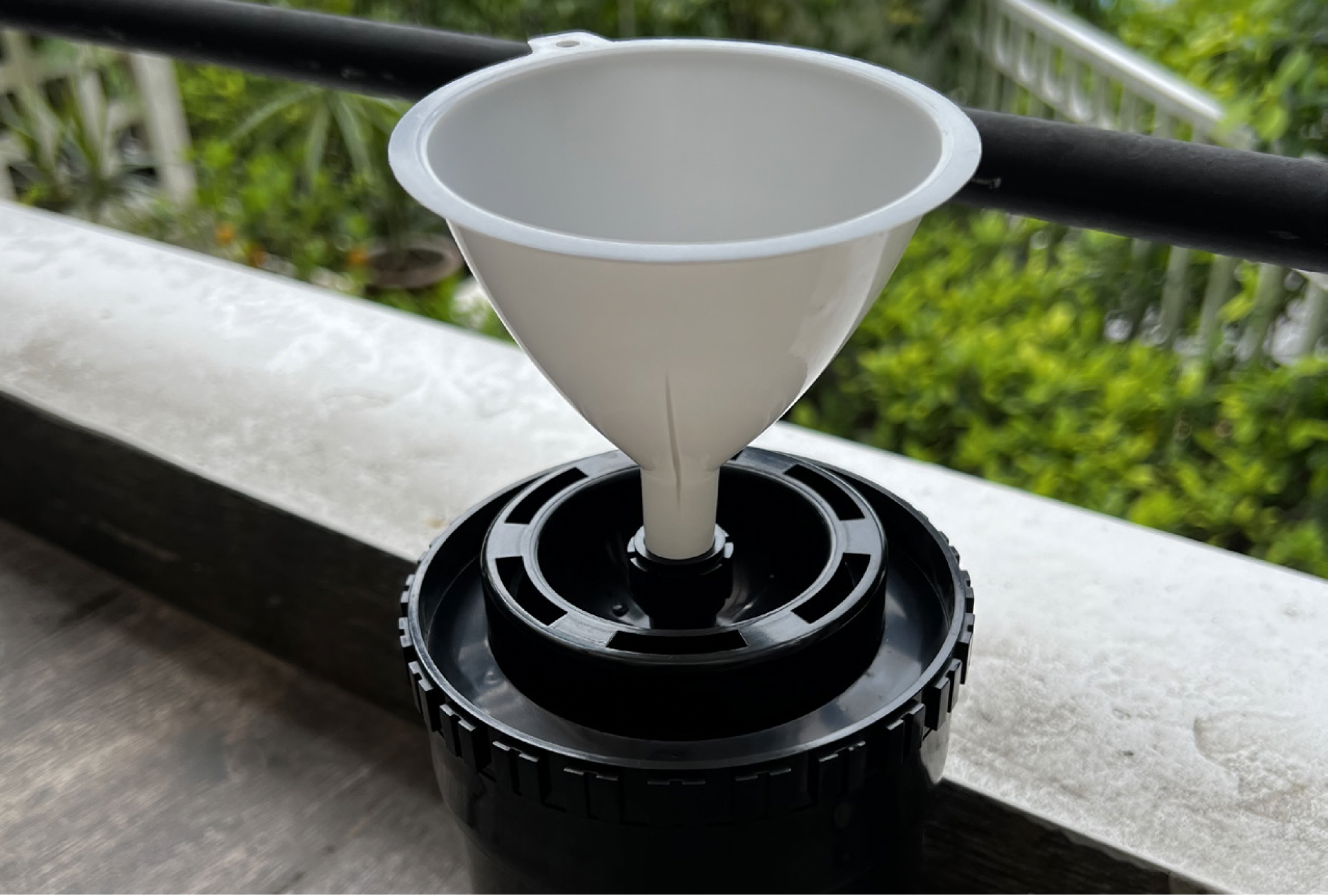
A repurposed film developing tank used to collect rainfall and develop a sheet of direct positive photographic paper.
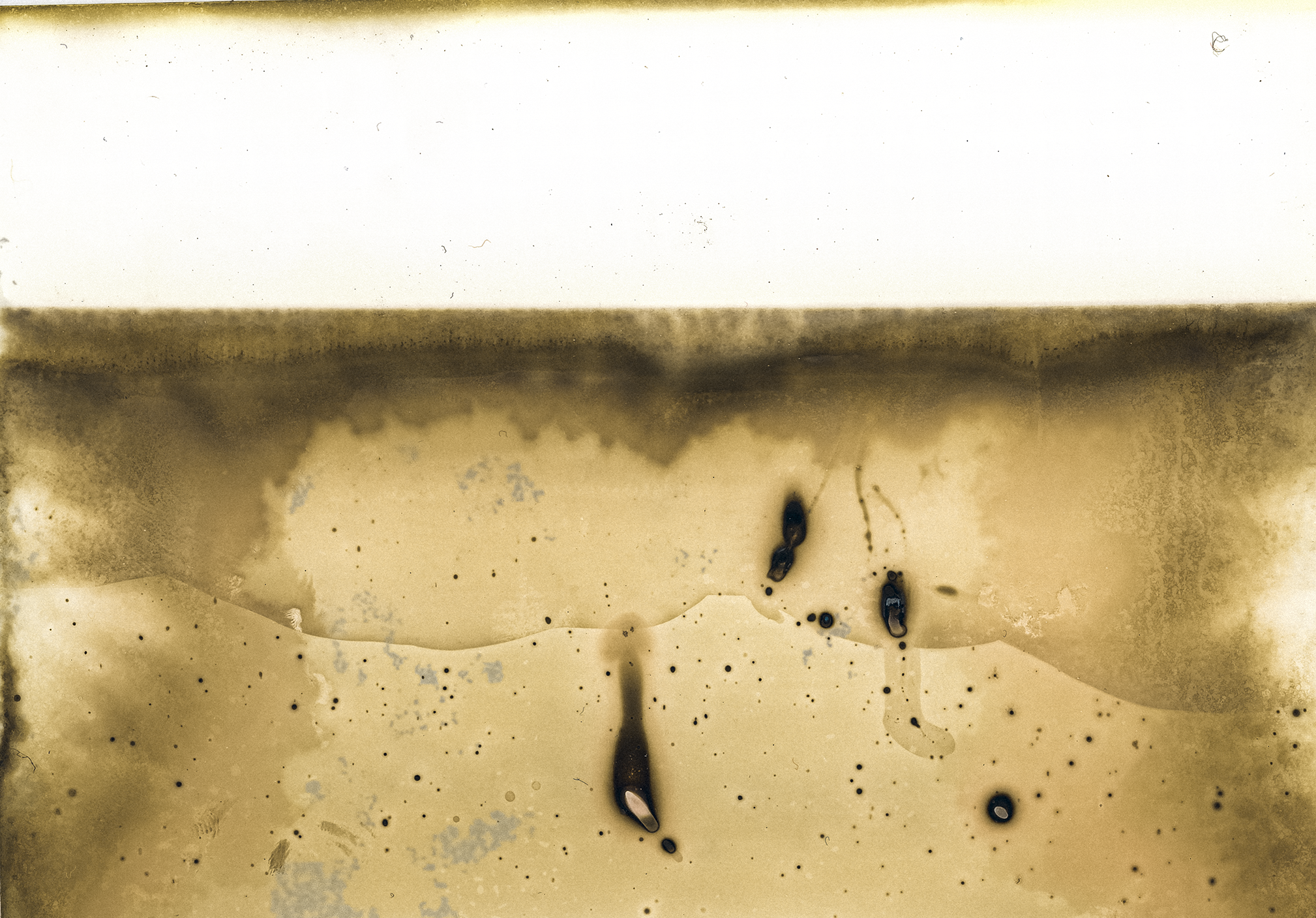
Robert Davies. Two days of rain. Silver gelatin direct positive paper. 2023.
Rather than showing what rain looks like, the resulting photograph records the physical effects of rainfall. Although I established the conditions under which the image would be made, its appearance was largely determined by natural processes.
The relationship between scientific observation and artistic expression was explored by artist and visual theorist György Kepes in his 1951 exhibition The New Landscape, which brought together photograms and scientific imagery. Kepes recognised that images originally produced for scientific purposes could also be appreciated for their aesthetic qualities, revealing patterns and structures in nature that might otherwise go unnoticed.
A climagram can similarly be understood as both a record of a natural phenomenon and a work of art. However, rather than seeking to measure or explain the phenomenon, its purpose is to explore the creative possibilities it offers.
The process becomes a collaboration between the artist and the natural environment. One establishes the conditions for the image to be made, whilst the other helps determine its appearance.
Collaborating with the sun
In Towards a Philosophy of Photography (1983), Vilém Flusser describes the camera as a programmable apparatus that, in turn, programmes the behaviour of the photographer. His argument is that the creative decisions we make are inevitably influenced by the capabilities and limitations of the equipment we use.
As photographic technology becomes increasingly sophisticated, Flusser’s observations raise a particularly relevant question: to what extent is the appearance of a photograph determined by the creative intentions of the photographer, and to what extent is it determined by the technology used to produce it?
For the British cameraless photographer Garry Fabian Miller, the answer lies in the creative intentions of the photographer. Returning to what he considers a ‘lost turning’ in the history of photography, Miller removes the camera from the image-making process altogether. Instead, he works directly with the fundamental elements of the medium: light, time and light-sensitive materials, allowing his artistic intentions to guide the process rather than the technology of the apparatus.
Rather than using light to illuminate a subject, Miller makes light itself the subject of his photographs. His cameraless photographic works explore the relationship between light, colour, duration and the natural world, whilst his working methods demonstrate the importance of experimentation and material discovery within his practice.
In Three hundred seconds in the sun, I became interested in exploring both the creative and destructive properties of sunlight. A spherical glass prism was placed on a sheet of handmade paper coated with wet cyanotype solution and exposed to the intense equatorial midday sun.
Within minutes, the concentrated sunlight had burned a hole through the paper, whilst simultaneously altering the colour of the surrounding photographic chemistry. The resulting image was formed through both a chemical reaction to light and the physical effects of its heat.
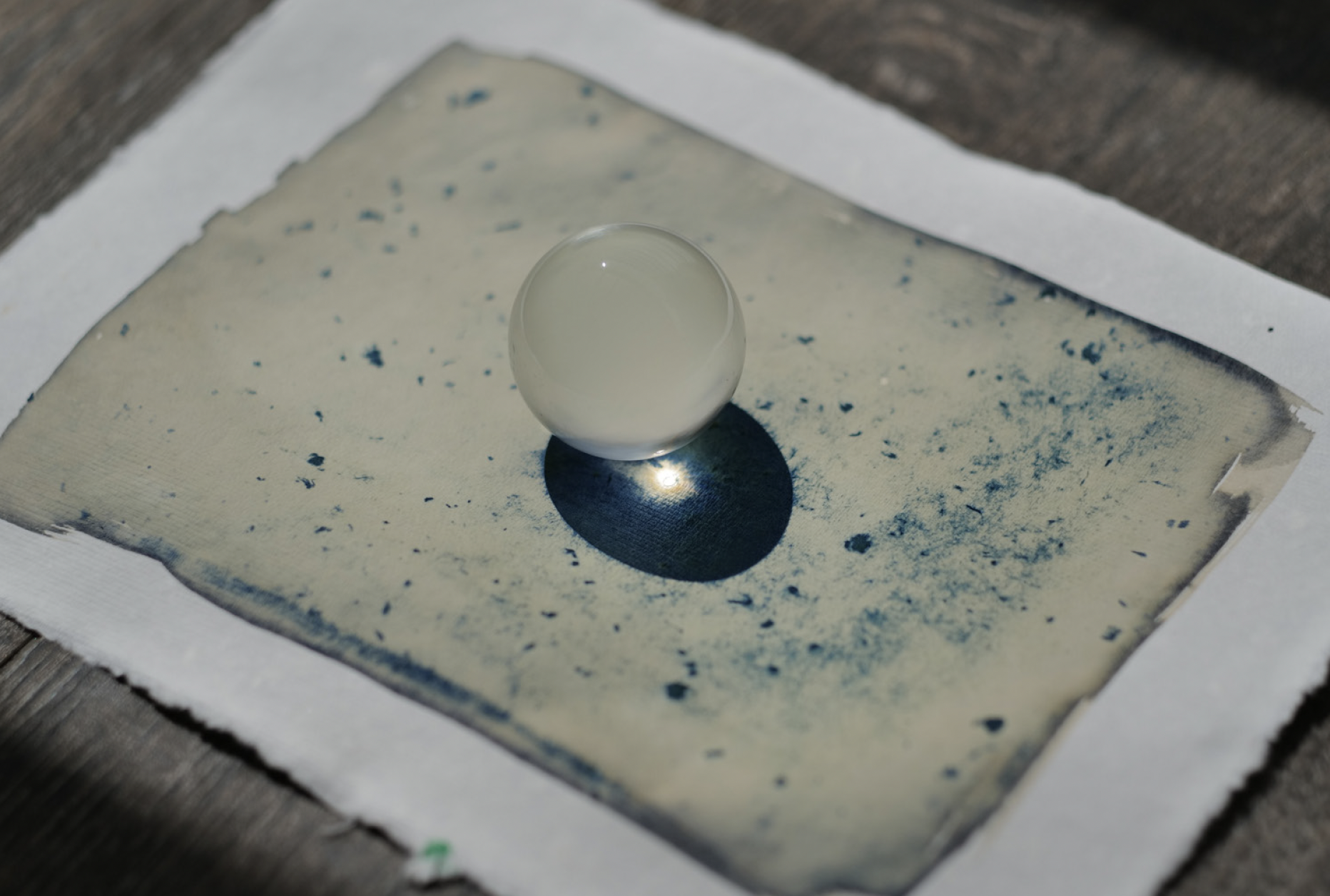
A spherical glass prism placed on cyanotype-coated handmade paper in the midday sun.
Robert Davies. Three hundred seconds in the sun. 2023.
The American photographer Chris McCaw explores similar possibilities in his series Sunburn. Using custom-built cameras and photographic paper negatives, McCaw focuses sunlight with sufficient intensity to physically burn the surface of the paper during extended exposures.
As the sun moves across the sky, it leaves a scorched path across the photographic surface. The resulting image records not only the apparent movement of the sun but also its physical power.
What connects these approaches is the use of sunlight as more than a source of photographic exposure. Its capacity to physically alter and even destroy photographic materials becomes an integral part of the creative process. In doing so, these approaches reverse the conventional relationship between light and photography. Light is no longer simply the means by which a subject becomes visible; light itself becomes the subject of the photograph.
Recording the passage of time
The relationship between photography, sunlight and the passage of time can be traced back to the origins of the medium.
In Nicéphore Niépce’s View from the Window at Le Gras (c.1826–27), widely recognised as the earliest surviving camera photograph, the prolonged exposure allowed sunlight to illuminate the buildings from different directions as the sun moved across the sky. Rather than capturing a single moment, the photograph contains evidence of an extended period of time within a single image.
In From sunrise to sunset, I explored this relationship between sunlight and duration using a vintage meteorological instrument known as a Jordan Sunshine Recorder.
Invented by James B. Jordan in 1885, the instrument consists of a metal cylinder with two small apertures through which sunlight falls onto a light-sensitive surface. As the sun moves across the sky, it leaves a photographic trace, recording the duration of sunshine throughout the day.
Unlike the more familiar Campbell–Stokes sunshine recorder, which uses a glass sphere to concentrate sunlight and burn a trace onto a recording card, the Jordan recorder relies on the chemical reaction of light-sensitive materials.
An example of an early twentieth-century Jordan Sunshine Recorder manufactured by Casella, London illustrates the simplicity of its design and its similarity to the principles of pinhole photography.
By repurposing this scientific instrument and experimenting with cyanotype chemistry applied to silver gelatin paper, I was able to record both the morning and afternoon passages of the sun within a single photographic image.
Robert Davies. From sunrise to sunset. 2023.
In conventional photography, exposure time is largely a technical consideration. Here, however, the passage of time becomes an integral part of the subject itself. The photograph records an event as it unfolds throughout the day, making the movement of the sun and the duration of its presence visible within a single image.
The absence of the photographer
The British photographic artist Susan Derges is particularly well known for her cameraless photographs of water. In her River Taw series, Derges worked outdoors at night, placing photographic paper beneath the surface of a river before exposing it to a brief flash of light.
By allowing the movement of water to influence the exposure directly, Derges reveals patterns and structures that might otherwise escape our attention. The unpredictable nature of water becomes an integral part of her creative process.
Whilst Derges is present at the moment of exposure, I became interested in what might happen if the photographer were deliberately absent during the formation of an image. For A week in a waterway, I submerged a canvas coated with cyanotype solution and acrylic inks in a dark waterway outlet and left it unattended. Once the materials were in place, the image was left to develop without further intervention on my part. Over time, fluctuations in water levels, exposure to sunlight and the change of water levels gradually altered the appearance of the canvas.
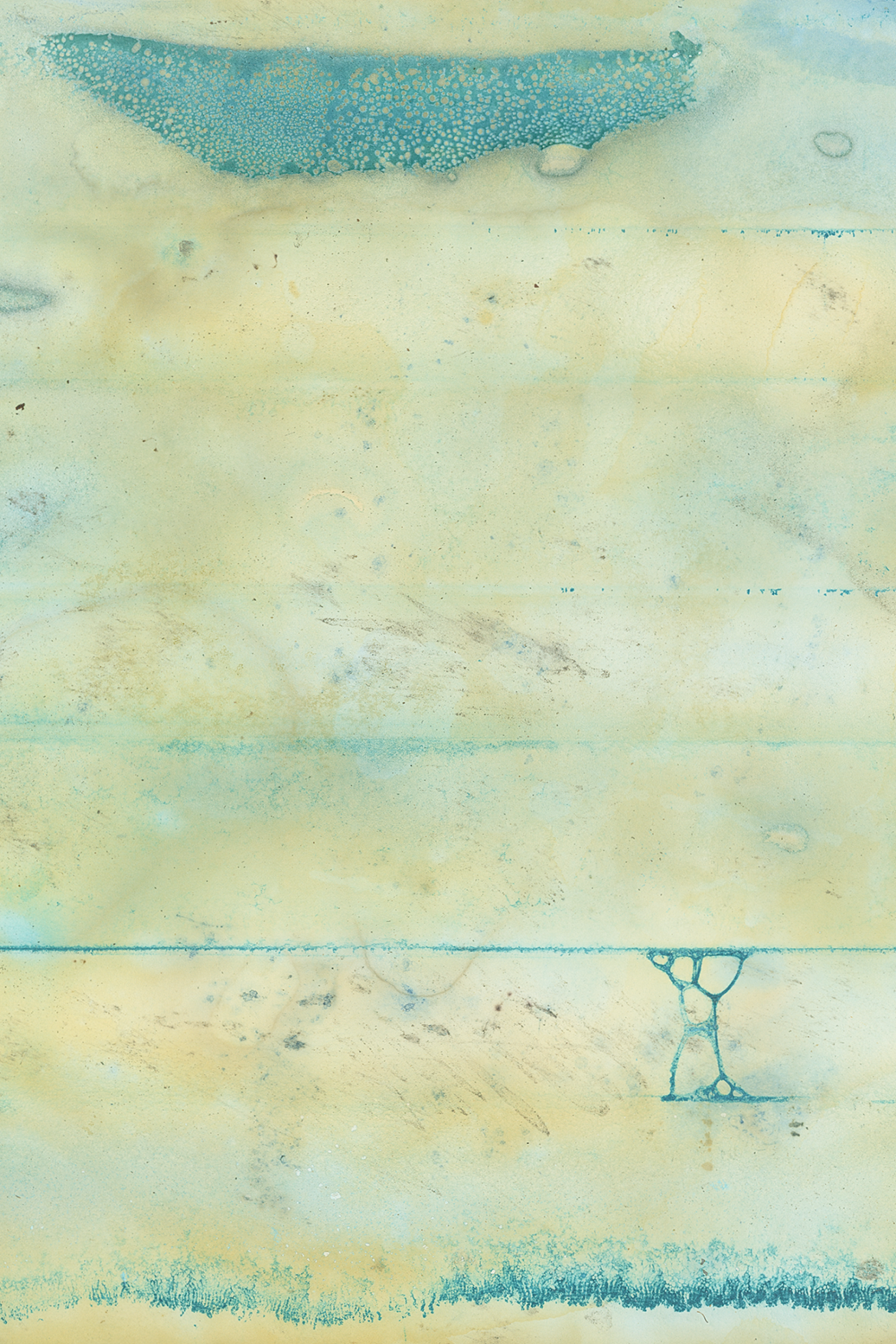
Robert Davies. A week in a waterway. Cyanotype and acrylic ink on canvas. 2023. .
This approach brings to mind the observations of French film theorist André Bazin in his essay The Ontology of the Photographic Image (1945): “All the arts are based on the presence of man, only photography derives an advantage from his absence.”
Although I was physically absent during the formation of the image, that absence was itself a deliberate creative decision. The choice of materials, location and duration of exposure remained under my control.
The absence of the photographer, therefore, does not imply an absence of artistic intention. Rather, the decision not to intervene becomes a creative act in itself.
In search of the unforeseen
As the work of cameraless photographers, both past and present, demonstrates, even the most fundamental photographic processes and materials can challenge established conventions of the medium. Returning to the fundamentals of photography is not a rejection of its technological advancements, but an opportunity to rediscover its creative potential and reconsider what a photograph can be.
Through the development of Climagrams, I have explored photography not simply as a means of representing the natural world, but as a means of allowing nature to participate directly in the creation of an image. In doing so, the distinction between the subject of a photograph and the process through which it is made becomes increasingly blurred.
This approach also invites us to reconsider the role of the photographer. Artistic intention need not be defined by the ability to control every aspect of an image’s creation. It can equally be expressed through the choice of materials, the conditions of exposure and the conscious decision to allow natural processes to influence the outcome. Chance and artistic intention are not opposing forces, but complementary elements of the creative process.
By relinquishing a degree of control, we open ourselves to possibilities that could not have been anticipated or imagined at the outset. The intention is not to create images by accident, but to deliberately establish the conditions for discovery.
To go in search of the unforeseen.
This article is adapted from a critical review of practice I wrote in 2023 as part of my MA Photography studies at Falmouth University, exploring the creative possibilities of cameraless photography through the development of my Climagrams project.
References and further reading
Barnes, Martin. 2018. Cameraless Photography. London: Thames & Hudson, in association with the Victoria and Albert Museum.
Barnes, Martin. 2012. Shadow Catchers: Camera-less Photography.
Barthes, Roland. 1993. Camera Lucida: Reflections on Photography. London: Vintage Classics.
Batchen, Geoffrey. 2016. Emanations: The Art of the Cameraless Photograph. Prestel.
Bazin, André. 1960. The Ontology of the Photographic Image. Film Quarterly, Vol. 13, No. 4, pp. 4–9. University of California Press.
Blank, Peter P. 1990. The Impact of Personal and Cultural Bias on the Literature of Cameraless Photography: Difficulties in the Literature Search and the Librarian's Response. Art Documentation, 9(2), pp. 96–100.
Cotton, Charlotte. 2015. Photography is Magic. New York: Aperture.
Durand, Régis. 2007. Event, Trace, Intensity. In David Campany (ed.), Art and Photography. London: Phaidon Press.
Durant, Mark Alice. 2007. Marco Breuer: Early Recordings.
Flusser, Vilém. 2000. Towards a Philosophy of Photography. Translated by Anthony Mathews. London: Reaktion Books.
Keller, Corey. 2009. Brought to Light: Photography and the Invisible. Yale University Press.
Kepes, György. 1951. The New Landscape. Arts & Architecture, Vol. 68.
Marcoci, Roxana (ed.). 2022. Wolfgang Tillmans: To Look Without Fear. New York: The Museum of Modern Art.
Mellor, David Allan and Miller, Garry Fabian. 2001. Tracing Light. Maidstone: Photoworks.
Strindberg, August. 1894. On Chance and Artistic Creation. Translated by Kjersti Board for Cabinet, No. 3, 2001.
Szarkowski, John. 1967. A European Experiment. Exhibition press release, 28 April. The Museum of Modern Art.
Szarkowski, John. 1989. Photography Until Now. New York: The Museum of Modern Art.
Yazdani, Sara R. 2021. Wolfgang Tillmans’s Abstract Mediations and Other Ecologies. Afterimage, Vol. 48, Issue 2, pp. 109–130. University of California Press.